The day he receives his first wages, King Arthur of the Sewers and Slums leaves the office with a quiet sense of achievement. As it is a Saturday, most of the shops have stayed open late – the gin halls, the oyster saloons, the tobacconists, the confectioners, the tripe-sellers … This being the day working men and women receive their pay, more money changes hands on this one evening than in the whole of the rest of the week.
He walks fast, checking over his shoulder every few steps to see if there is anyone following him. The city, canopied under a fog like smoke from a thousand fires, hides pickpockets and cutpurses. But that is nothing new. The only thing that has changed is that he has something to lose now. How strange that having money makes one feel less safe.
Rounding a corner, he sees a dustman collecting ashes and cinders. He knows that ash can be sold to brickmakers. As for cinders, they are good for fuel. The streets are full of refuse that can be collected and traded for a few pennies, even dead cats, which are soon snapped up by furriers. White cats are especially sought after, earning as much as sixpence each. But Arthur has never been able to bring himself to deal in dead felines.
He notices a hansom cab with a liveried driver, pulled up in front of cordwainer’s shop. As he edges past it, he glances inside the open carriage door. A young woman, not that much older than he is, sits with her skirts spread neatly around her, a silk fan resting on the velvet seat, waiting for the sales girls to bring her samples of finely crafted shoes. Their gazes meet briefly. In that moment Arthur sees himself through her eyes, taking in his shabby bowler hat and worn jacket, ill-fitting and mud-spattered. He feels acutely the difference between them, as the wealthy lady looks through and beyond him, as though he were invisible.
If poverty were a place, a hostile landscape into which you were deliberately pushed or accidentally stumbled, it would be an accursed forest – a damp and gloomy wildwood suspended in time. The branches clutch at you, the boles block your way, the brambles draw you in, determined not to let you out. Even when you manage to cut down one obstacle, instantly it is replaced by another. You tear the skin off your hands as you work doggedly to clear a path elsewhere, but the moment you turn your back the trees close in on you again. Poverty saps your will, little by little. But, just now, with coins jingling in his pocket, Arthur feels hopeful. One day, he will get out of this city and travel far, to the ends of the earth if need be, where the margins of water and land seamlessly merge, and people will never know from what abject penury he came.
From a vendor nearby he purchases two meat-filled pies, coffins – one for him and his mother to share, the other for his twin brothers. He holds the package close to his chest, the smell tickling his nose like a feather.
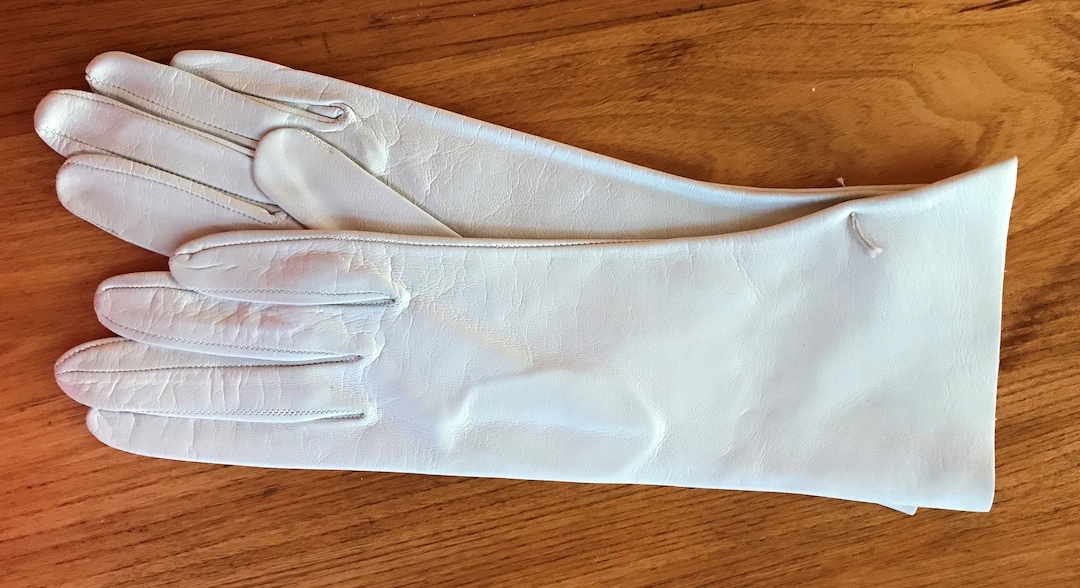
In a haberdasher’s window on Broad Street, he sees a pair of white kid gloves, lined in deep blue satin and trimmed with lace. He stares at them for a long moment, admiring the exquisite patterns and the delicate leatherwork.
Arthur has heard there is a glove-language spoken on the streets of London. Smoothing them out gently means ‘I wish to be with you’, while dropping the pair signifies ‘I love you.’ Turning them inside out is another way of saying, ‘I hate you, stay away from me.’ As interested as he is in the particulars of this language, what he really wants is to touch the soft hide, feel the subtle texture between his fingers. He wonders what his mother would do if he bought them for her as a present. He can almost see the smile blooming on her face – incredulous, pure. He promises himself he will one day get those gloves for her.
When he arrives home, it is his father who opens the door. ‘Did you get paid today, boy?’
Arthur gives a slight nod, wary of what might follow.
‘Hand it over, then.’
‘I bought a couple of meat pies on the way home.’
‘Begging your pardon? Why would you do such a foolish thing?’
Arthur looks away. ‘A treat for the little ones.’
‘You bloody cretin! What gives you the right to do that?’
The boy shrinks back but his voice doesn’t. ‘It’s my money.’
‘Your money, did you say? Bilge! It’s me who found you the job. Show some gratitude, you bonehead!’
Arthur flinches at the undisguised malice in his father’s voice. How can a man hold so much loathing in his heart for his own flesh and blood? He wonders, and not for the first time, what his father sees when he looks at him. Does he despise him because they are very different? Or is it just the opposite – is it because he cannot bear to recognize himself in his son?
‘Speak, boy! Answer me.’
A flush stains Arthur’s cheeks. He does not like confrontation. If only he could live without hurting anyone and without ever getting hurt. He turns his face away, but he is too proud to concede defeat.
‘I work hard,’ he says. ‘I slog my guts out every day while you’re at some godforsaken den drinking yourself senseless. I owe you nothing. Nothing.’
Swift as an arrow winged from a bow, his father punches him in the stomach. The boy doubles over, but, yanked up by the hair, he is forced to stand, and that is when he receives the second blow, this time to the face.