Departure[s]

The other day, I discovered an alarming possibility. No, worse: an alarming fact.
I have an old friend, a consultant radiologist, who for years has been sending me clippings from the British Medical Journal. She knows that my interest tends towards the ghoulish and the extreme. In my memory – that place where degradation and embellishment overlap – I have filed away cases of patients who exploded when a heated scalpel ignited their bodily gases, and others from the early days of the MRI scanner when internal metal stitches were shot like shrapnel into soft flesh. These stories are sometimes accompanied by photos: for instance, of a man who grew his toenails to such a curling length - several metres, as I recall - that for years he had been unable to walk. Then there is the medical profession’s everyday task of removing unexpected objects which have been swallowed – like bags of nails - or forcibly indulged up the rectum. (In the old days, popular anal self-implants were miniature busts of Napoleon, a habit which doubtless added patriotism to pleasure.) And a case I particularly remember, of a man who had been fitted with a tracheostomy tube. When he went for a check-up, doctors were baffled by yellowish stains around the hole into which the tube was fixed. It turned out that the patient was a desperate smoker who, unable to inhale through his mouth any more, discovered that if he took out his tube, the cigarette fitted perfectly in the hole; all he had to do was light up and inflate his lungs. Men (and most of these bizarre activities were undertaken by men) can be most ingenious, even - or especially - when it goes against their own best interests.
From the archives
·
2013
The Goldfinch
That night, at Boris' — lying drunk on my half of the batik-draped mattress — I tried to remember what Pippa had looked like. But the moon was so large and clear through the uncurtained window that it made me think instead of a story my mother had told me, about driving to horse shows with her mother and father in the back seat of their old Buick when she was little. “It was a lot of travelling — ten hours sometimes through hard country. Ferris wheels, rodeo rings with sawdust, everything smelled like popcorn and horse manure. One night we were in San Antonio, and I was having a bit of a meltdown — wanting my own room, you know, my dog, my own bed — and Daddy lifted me up on the fairgrounds and told me to look at the moon. ‘When you feel homesick,’ he said, ‘just look up. Because the moon is the same wherever you go.’ So after he died, and I had to go to Aunt Bess — I mean, even now, in the city, when I see a full moon, it’s like he’s telling me not to look back or feel sad about things, that home is wherever I am.” She kissed me on the nose. “Or where you are, puppy. The center of my earth is you.”

Read more of this excerpt...

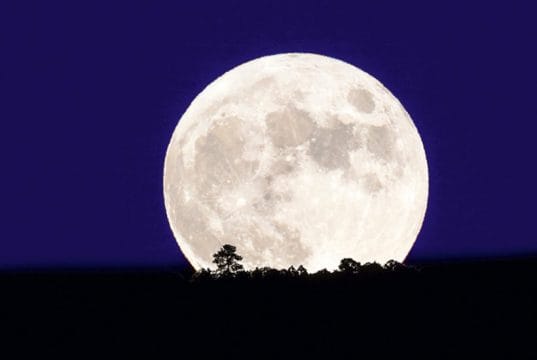
The Goldfinch
That night, at Boris' — lying drunk on my half of the batik-draped mattress — I tried to remember what Pippa had looked like. But the moon was so large and clear through the uncurtained window that it made me think instead of a story my mother had told me, about driving to horse shows with her mother and father in the back seat of their old Buick when she was little. “It was a lot of travelling — ten hours sometimes through hard country. Ferris wheels, rodeo rings with sawdust, everything smelled like popcorn and horse manure. One night we were in San Antonio, and I was having a bit of a meltdown — wanting my own room, you know, my dog, my own bed — and Daddy lifted me up on the fairgrounds and told me to look at the moon. ‘When you feel homesick,’ he said, ‘just look up. Because the moon is the same wherever you go.’ So after he died, and I had to go to Aunt Bess — I mean, even now, in the city, when I see a full moon, it’s like he’s telling me not to look back or feel sad about things, that home is wherever I am.” She kissed me on the nose. “Or where you are, puppy. The center of my earth is you.”
Read more of this excerpt...
WORDS TO LIVE BY

“There was only one catch and that was Catch-22, which specified that a concern for one's safety in the face of dangers that were real and immediate was the process of a rational mind.”

Catch 22 · Joseph Heller · 1961
NON-FICTION


NEW MUSIC