Departure[s]

The other day, I discovered an alarming possibility. No, worse: an alarming fact.
I have an old friend, a consultant radiologist, who for years has been sending me clippings from the British Medical Journal. She knows that my interest tends towards the ghoulish and the extreme. In my memory – that place where degradation and embellishment overlap – I have filed away cases of patients who exploded when a heated scalpel ignited their bodily gases, and others from the early days of the MRI scanner when internal metal stitches were shot like shrapnel into soft flesh. These stories are sometimes accompanied by photos: for instance, of a man who grew his toenails to such a curling length - several metres, as I recall - that for years he had been unable to walk. Then there is the medical profession’s everyday task of removing unexpected objects which have been swallowed – like bags of nails - or forcibly indulged up the rectum. (In the old days, popular anal self-implants were miniature busts of Napoleon, a habit which doubtless added patriotism to pleasure.) And a case I particularly remember, of a man who had been fitted with a tracheostomy tube. When he went for a check-up, doctors were baffled by yellowish stains around the hole into which the tube was fixed. It turned out that the patient was a desperate smoker who, unable to inhale through his mouth any more, discovered that if he took out his tube, the cigarette fitted perfectly in the hole; all he had to do was light up and inflate his lungs. Men (and most of these bizarre activities were undertaken by men) can be most ingenious, even - or especially - when it goes against their own best interests.
From the archives
·
1939
Impatience of the Heart
I cannot describe my state of mind as I stood outside the house. Behind the lighted windows the music died away; no doubt the musicians were merely breaking off for an interval, but in my guilty and overwrought state I feverishly imagined that it was because of me that the dancing had stopped. Everyone would now be crowding into the little boudoir to comfort the sobbing girl; all the guests, the women, the men, would, one and all, be inveighing against the reprobate who had invited a crippled child to dance and then, having played his dastardly trick, beat a cowardly retreat. And tomorrow — I could feel the cold sweat breaking out under my cap — my shameful behaviour would be gossiped about and decried all over the town. I could just imagine how my fellow-officers, Ferenez, Mislywitz and above all Jozsi, that confounded wag, would come up to me, smacking their lips. “Well, Toni, this is a fine way to behave! Once you’re let off the lead you go and disgrace the whole regiment.” For months this ragging and sneering would go on in the officers’ mess; at our mess table every piece of idiocy on the part of any one of us was chewed over for the next ten or twenty years, every asininity immortalized, every joke fossilized. Today, after the lapse of sixteen years, they still tell the hoary old story of how Captain Wolinski came back from Vienna and boasted of having made the acquaintance in the Ringstrasse of Countess T. and having spent the very same night with her in her flat; of how two days later the newspapers reported the scandalous story of a maid who, having been dismissed by the Countess, had swindled a number of shops and indulged in all sorts of amorous adventures by passing herself off as her former mistress; and how the wretched Casanova had been obliged, moreover, to put himself in the hands of the regimental doctor for three weeks. Anyone who once made himself a laughing-stock in the eyes of the regiment remained so forever; there was no forgetting, no forgiving, there. And the more I figured the whole thing out, the more frenzied and absurd did my ideas become. At that moment of folly it seemed to me a hundred times easier to give one quick pull on the trigger of my revolver than to live through the hellish torments of the next few days, the impotent waiting to discover whether my comrades already knew of my disgrace and whether the secret whispering and sniggering were not already going on behind my back. Oh, I knew myself only too well! I knew that I should never have the strength to hold out once the mocking and sneering and gossiping got under way.

Read more of this excerpt...

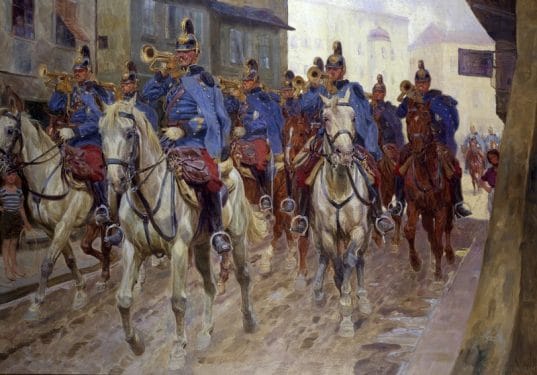
Impatience of the Heart
I cannot describe my state of mind as I stood outside the house. Behind the lighted windows the music died away; no doubt the musicians were merely breaking off for an interval, but in my guilty and overwrought state I feverishly imagined that it was because of me that the dancing had stopped. Everyone would now be crowding into the little boudoir to comfort the sobbing girl; all the guests, the women, the men, would, one and all, be inveighing against the reprobate who had invited a crippled child to dance and then, having played his dastardly trick, beat a cowardly retreat. And tomorrow — I could feel the cold sweat breaking out under my cap — my shameful behaviour would be gossiped about and decried all over the town. I could just imagine how my fellow-officers, Ferenez, Mislywitz and above all Jozsi, that confounded wag, would come up to me, smacking their lips. “Well, Toni, this is a fine way to behave! Once you’re let off the lead you go and disgrace the whole regiment.” For months this ragging and sneering would go on in the officers’ mess; at our mess table every piece of idiocy on the part of any one of us was chewed over for the next ten or twenty years, every asininity immortalized, every joke fossilized. Today, after the lapse of sixteen years, they still tell the hoary old story of how Captain Wolinski came back from Vienna and boasted of having made the acquaintance in the Ringstrasse of Countess T. and having spent the very same night with her in her flat; of how two days later the newspapers reported the scandalous story of a maid who, having been dismissed by the Countess, had swindled a number of shops and indulged in all sorts of amorous adventures by passing herself off as her former mistress; and how the wretched Casanova had been obliged, moreover, to put himself in the hands of the regimental doctor for three weeks. Anyone who once made himself a laughing-stock in the eyes of the regiment remained so forever; there was no forgetting, no forgiving, there. And the more I figured the whole thing out, the more frenzied and absurd did my ideas become. At that moment of folly it seemed to me a hundred times easier to give one quick pull on the trigger of my revolver than to live through the hellish torments of the next few days, the impotent waiting to discover whether my comrades already knew of my disgrace and whether the secret whispering and sniggering were not already going on behind my back. Oh, I knew myself only too well! I knew that I should never have the strength to hold out once the mocking and sneering and gossiping got under way.
Read more of this excerpt...
WORDS TO LIVE BY

“There was only one catch and that was Catch-22, which specified that a concern for one's safety in the face of dangers that were real and immediate was the process of a rational mind.”

1961 ·
Catch 22
Joseph Heller
NON-FICTION


NEW MUSIC